Hainan has no shortage of places to see orchids, but most are flower markets or potted displays. In Sanya there is something different — orchids that grow on trees and cling to rocks, in something close to their natural state.
The place is the National Tropical Orchid Germplasm Bank of the Sanya Academy of Forestry, located in Tianya District, Sanya.
One important note first: this site is not open to individual visitors. It receives organised groups and study-tour institutions only (arranged through institutions). So this is not a typical free-and-easy guide — it is a record of what we saw while visiting. If you organise study tours, lead groups, or simply love orchids, here is what is inside.
What this institution is
The National Tropical Orchid Germplasm Bank is part of the Sanya Academy of Forestry, a national-level institution for conserving orchid genetic resources. The grounds include:
- Near-natural orchid conservation hall — a greenhouse landscape where orchids grow on trees and rocks (epiphytic cultivation)
- Standardised Phalaenopsis production nursery — large-scale growing greenhouses
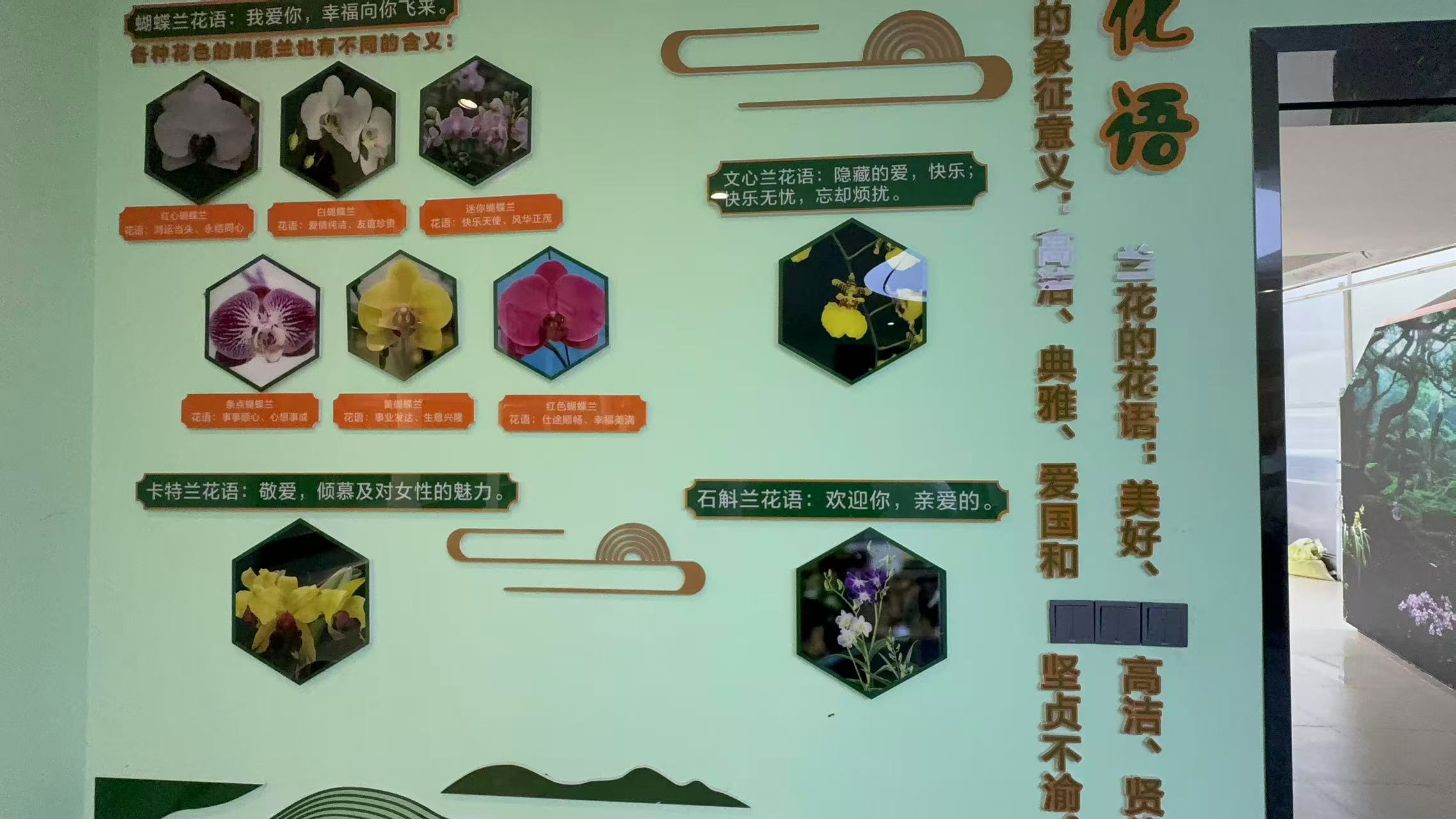
- Science exhibition area — displays on orchid production and orchid symbolism
- Outdoor grounds — a 200-mu tropical tree seed base plus epiphytic orchids
- Sales area — potted orchids
The conservation hall: orchids that live on trees
This is the most interesting part of the grounds.
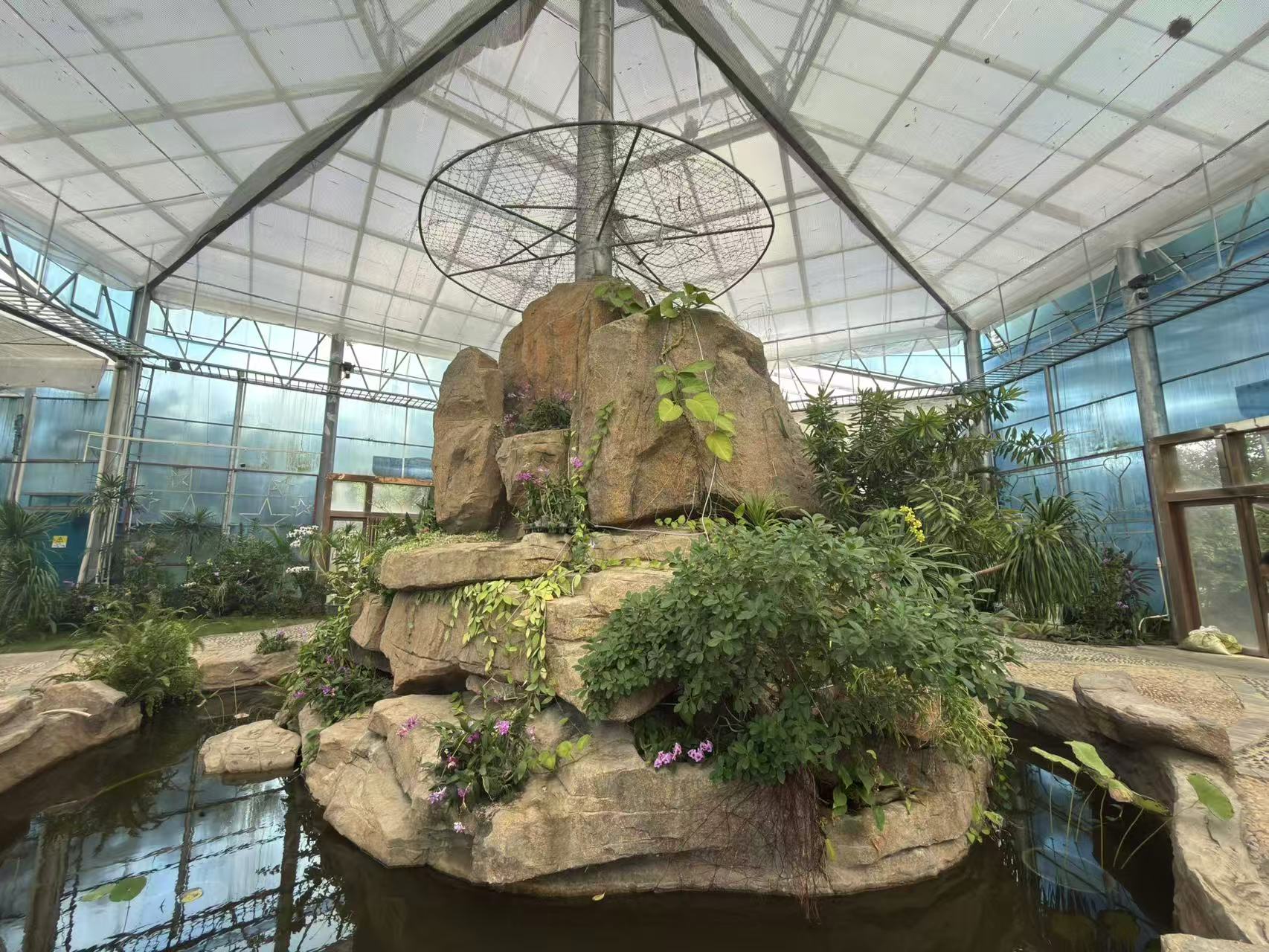
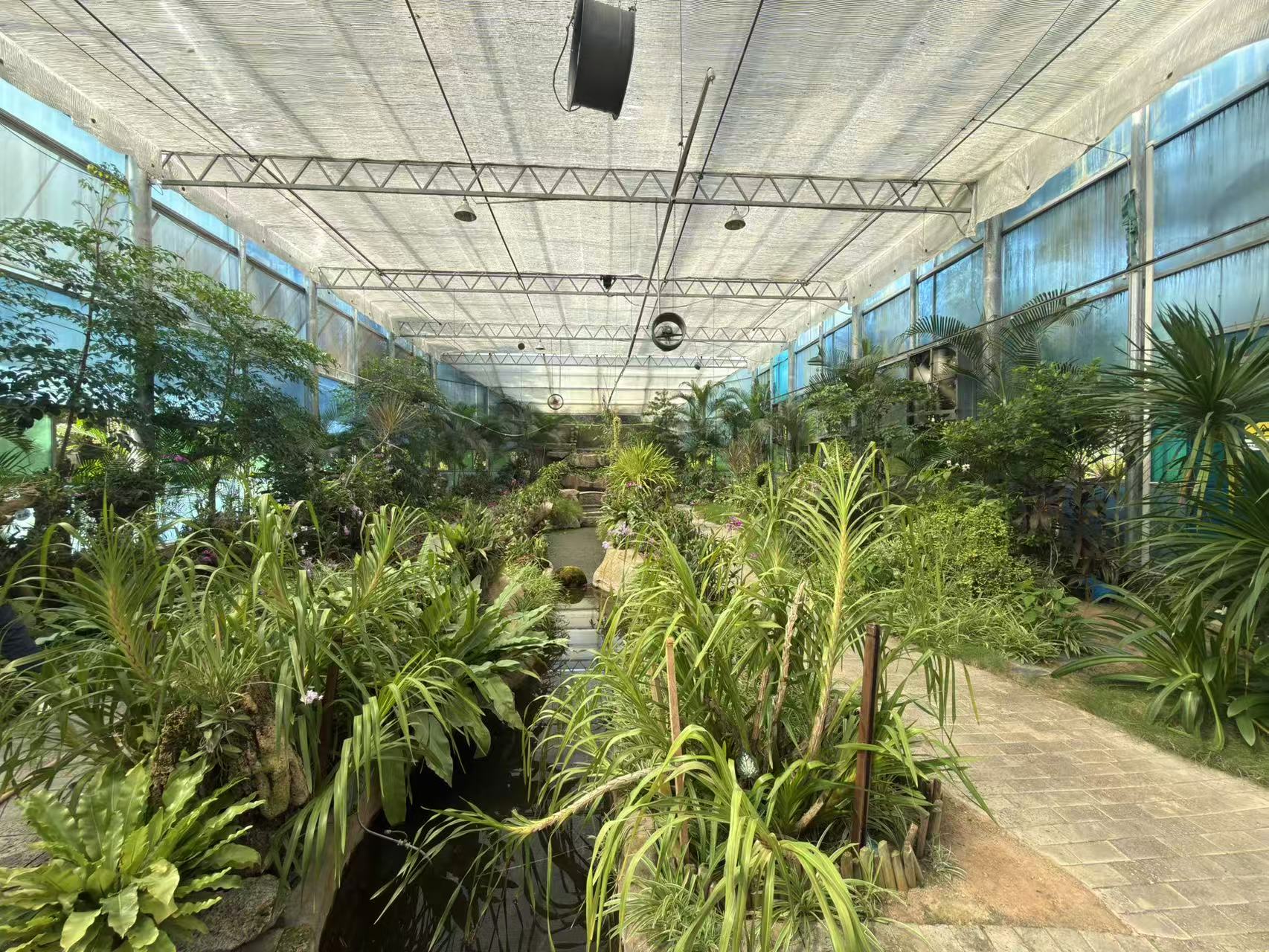
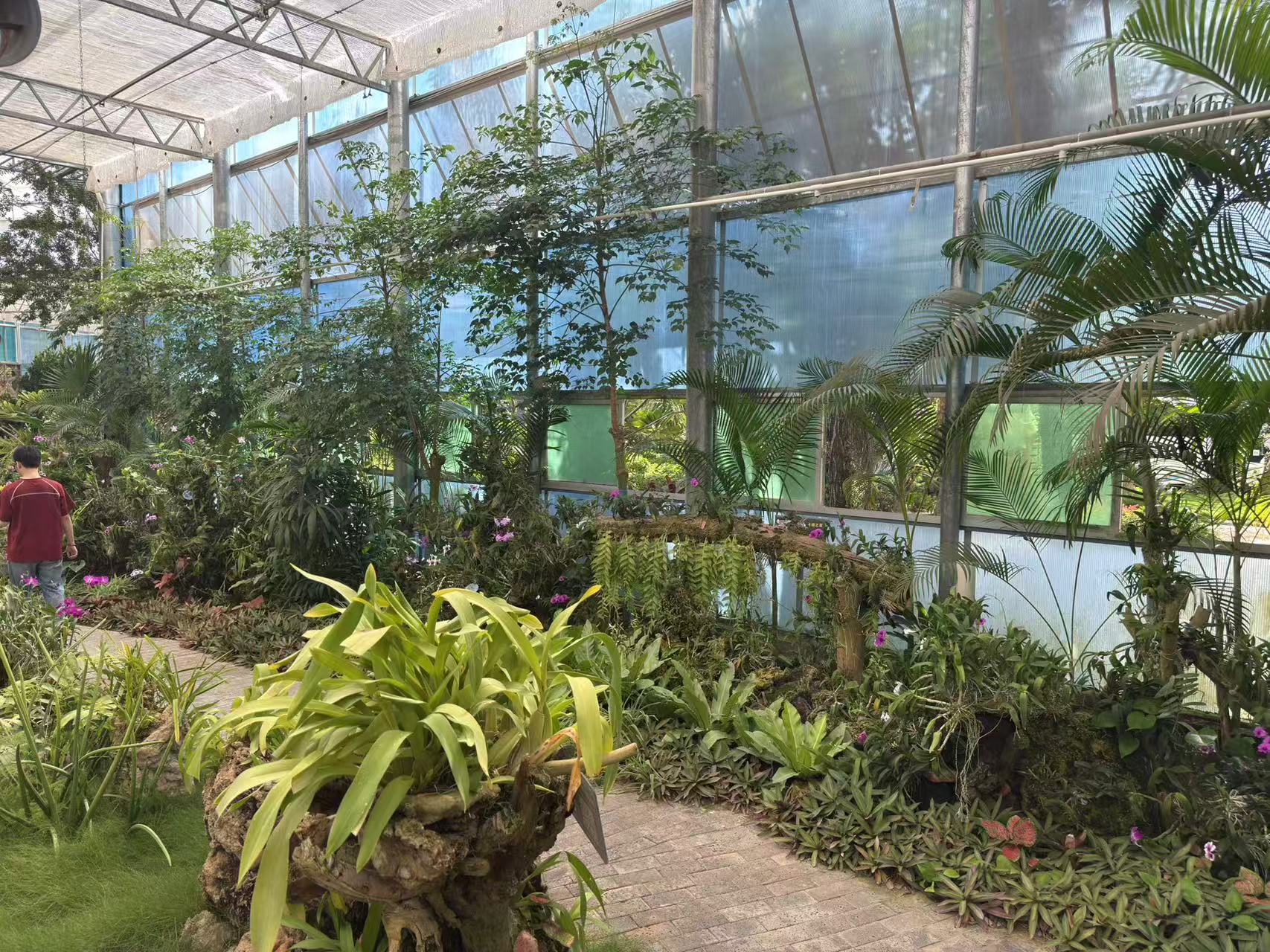
The orchids are not planted in pots but attached to tree trunks and rocks — much as they would grow in a tropical rainforest.
Walking in feels like an orchid rainforest: a rockery and pond in the centre with orchids covering the stone walls; epiphytic orchids hanging overhead; high humidity, moss over the rocks, aerial roots dangling.
This near-natural method exists for conservation reasons, but it looks far more alive than a flower-market display — you see how orchids actually live in nature.
Orchid species: learn them one by one
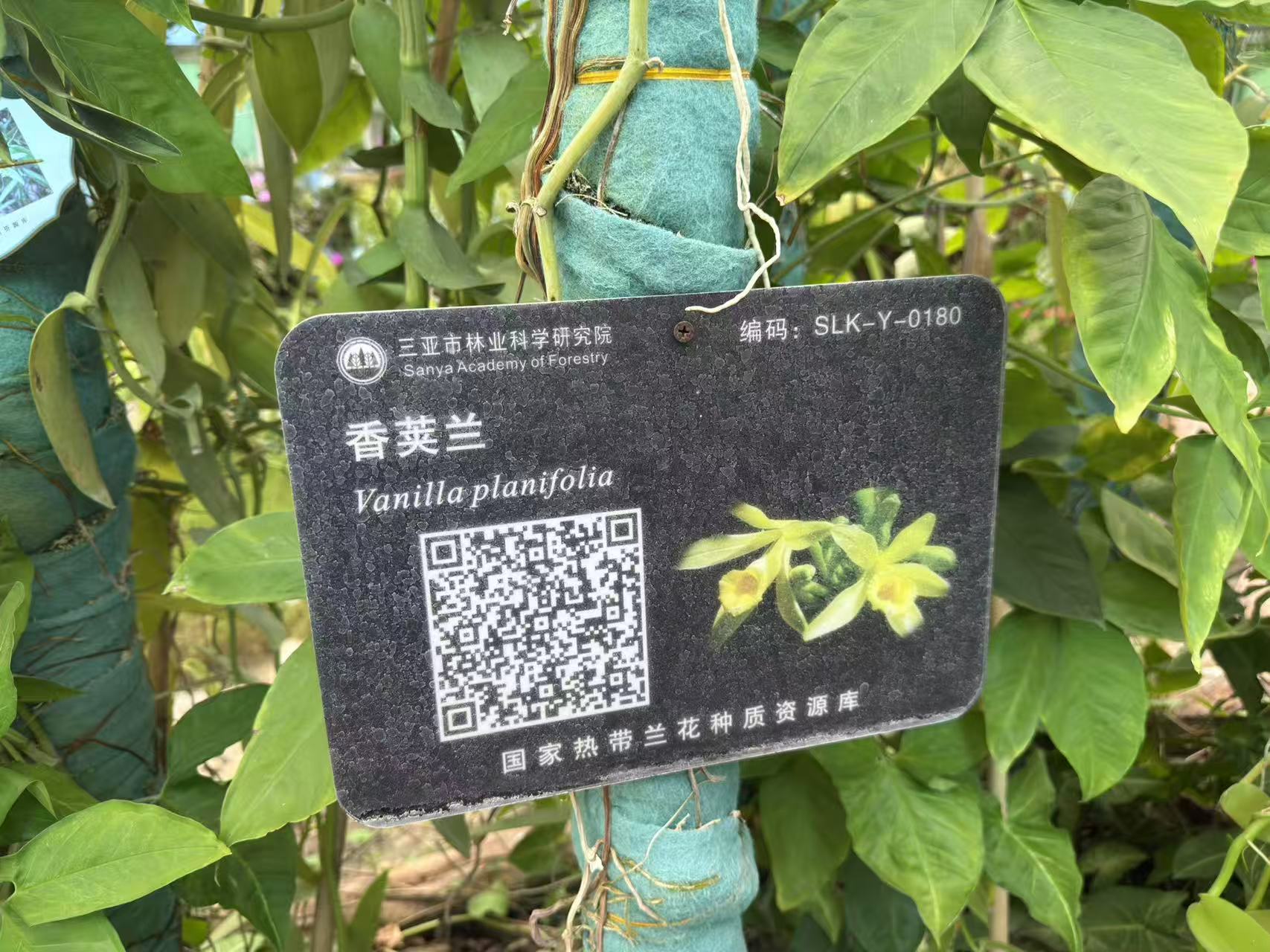
Every orchid has a plant label with its name, Latin name and a QR code for more information. Along the way you can meet:
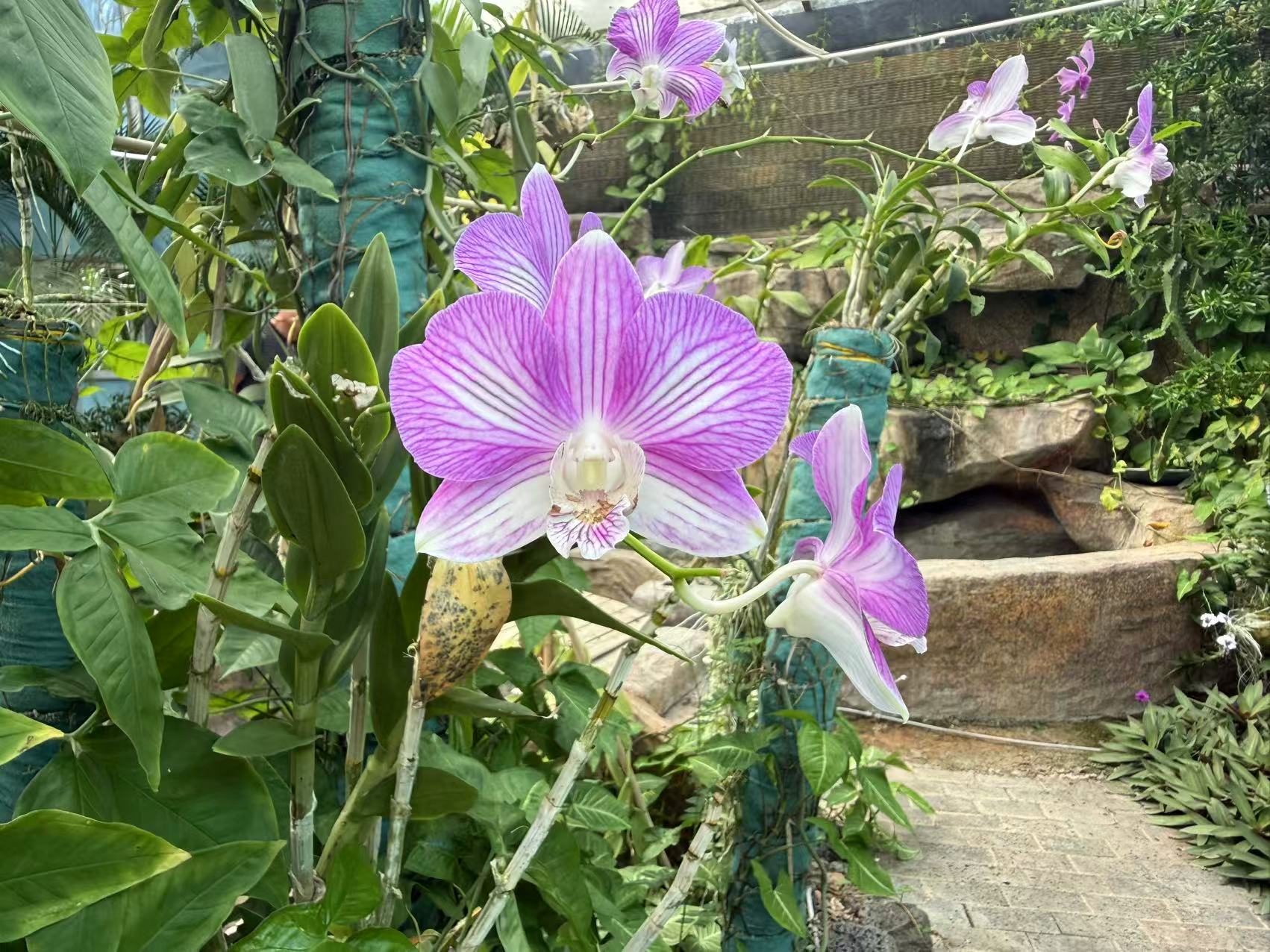
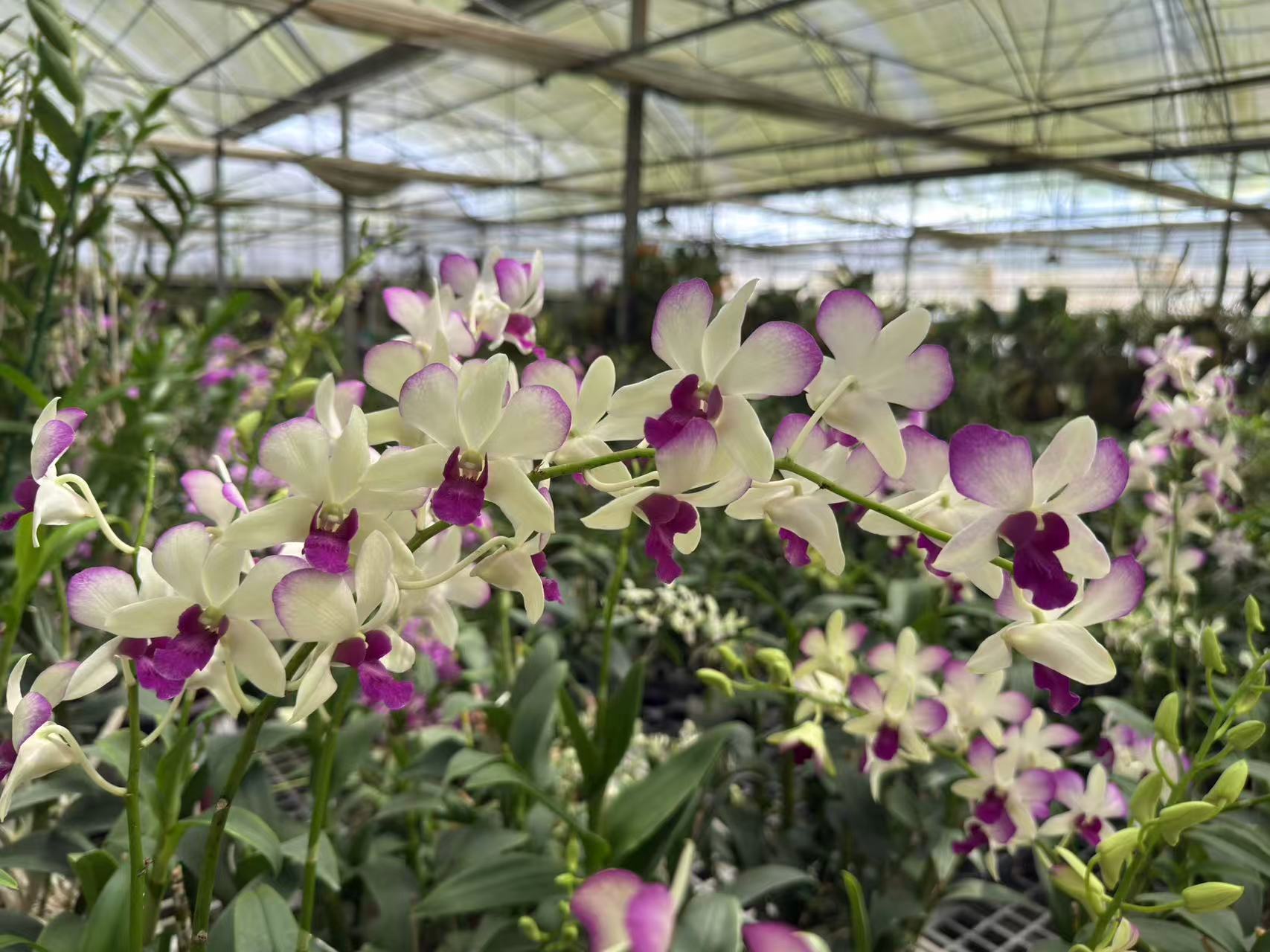
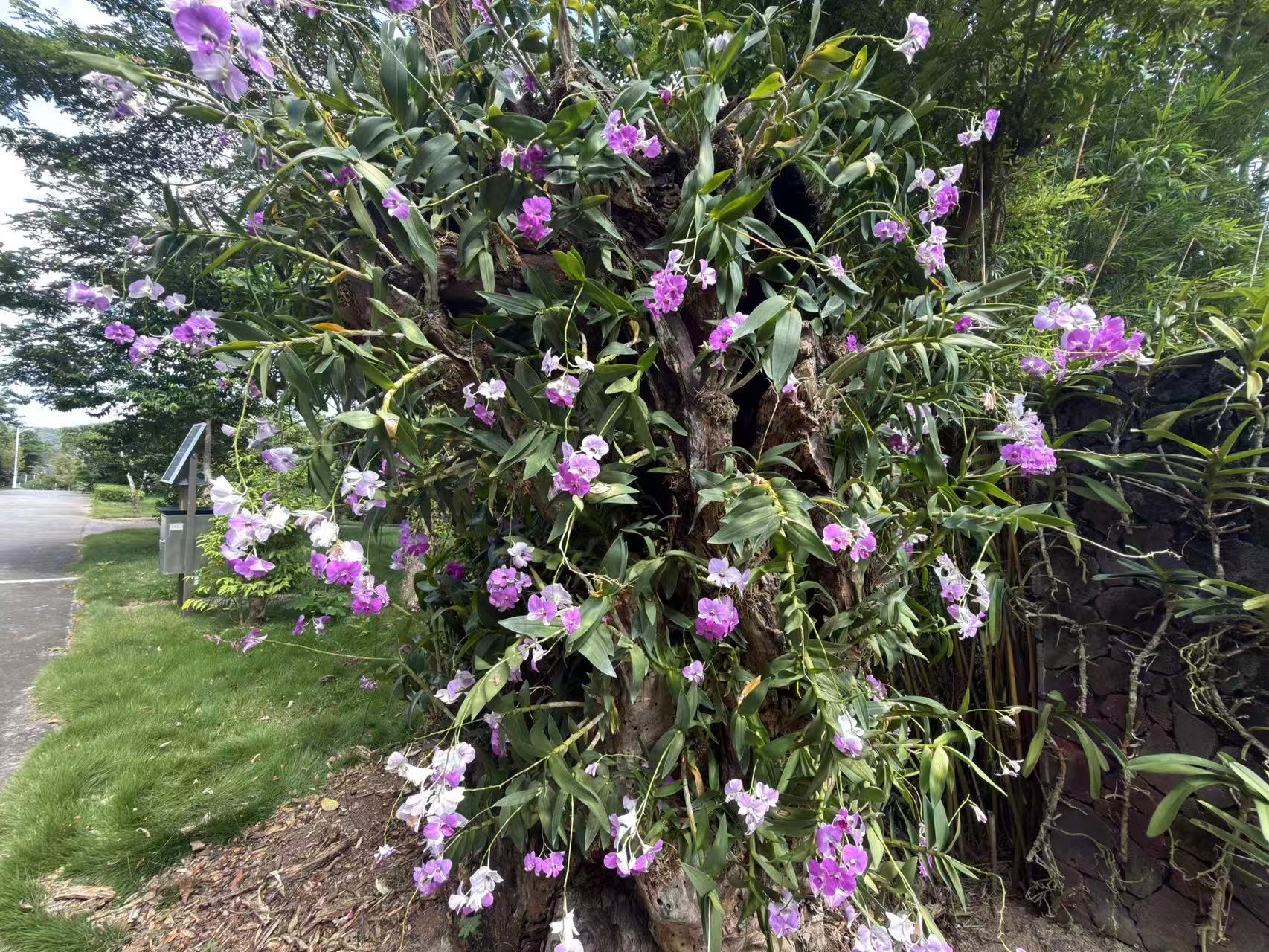
- Dendrobium — magenta, growing on rocks (local species such as Dendrobium hainanense, Dendrobium lindleyi, Dendrobium spatelliflorum)
- Phalaenopsis — large flowers, long bloom, the most numerous here
- Vanilla — the very plant that gives vanilla ice cream its flavour, a climbing orchid
- Phalaenopsis pulcherrima — small pink flowers
- Cymbidium dayanum — winter-flowering, small green-white flowers
- Cattleya and Oncidium — described on the orchid-language wall
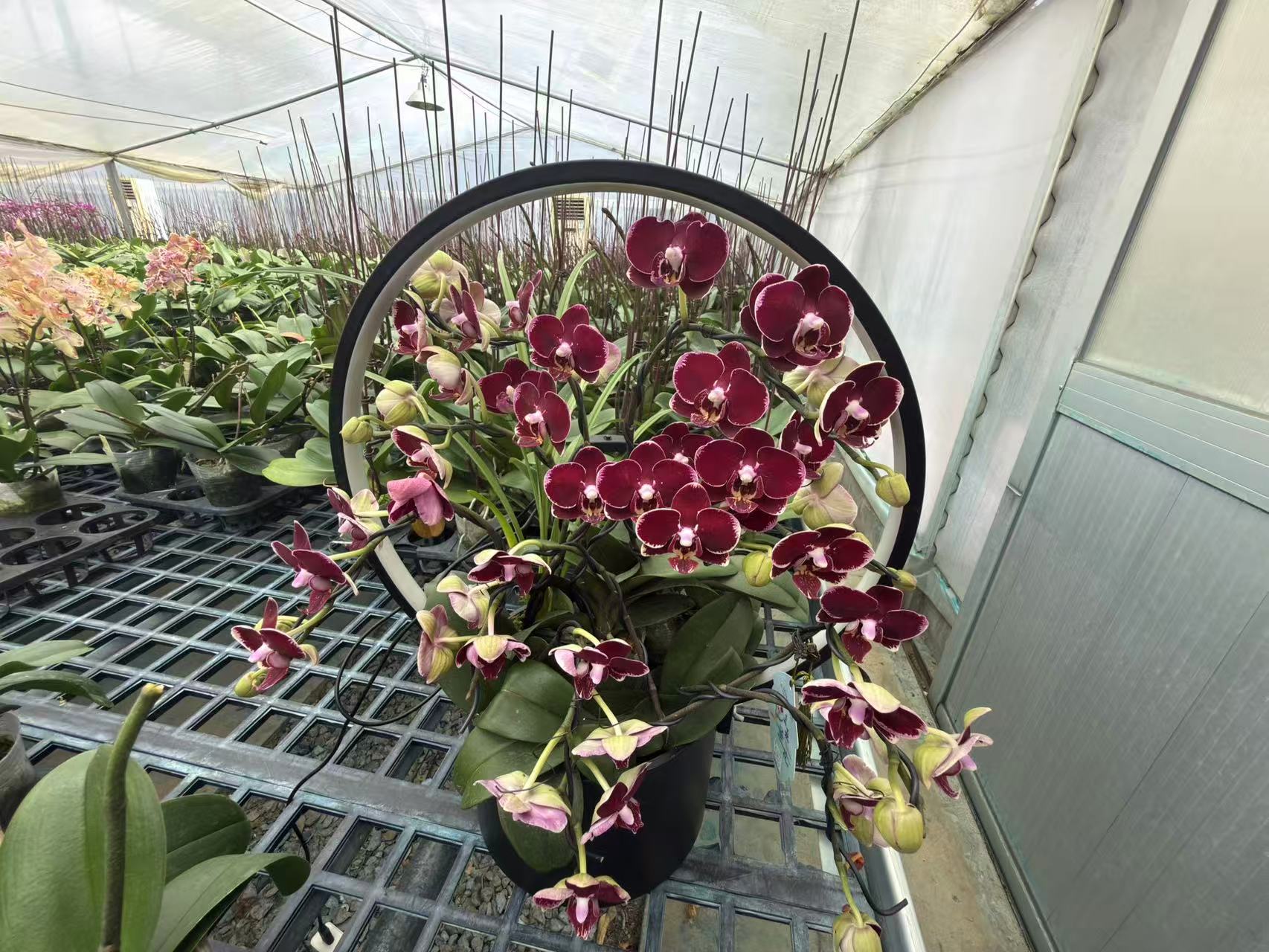
Phalaenopsis production nursery
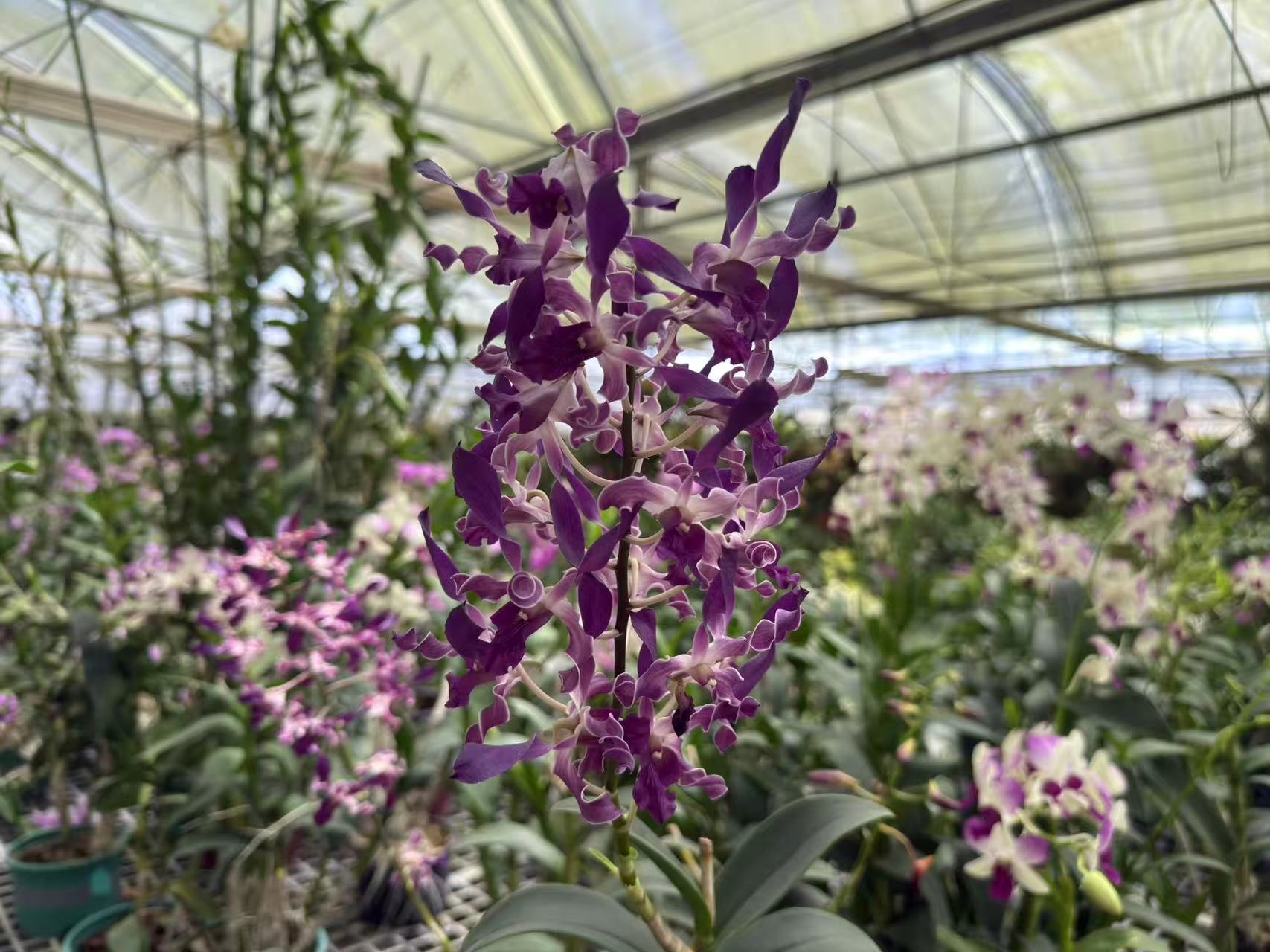
A whole range of production greenhouses, with rows of pink, white and burgundy Phalaenopsis blooming at once — a spectacular (and very photogenic) sight. You can see the standardised production equipment: benches, fans, climate control.
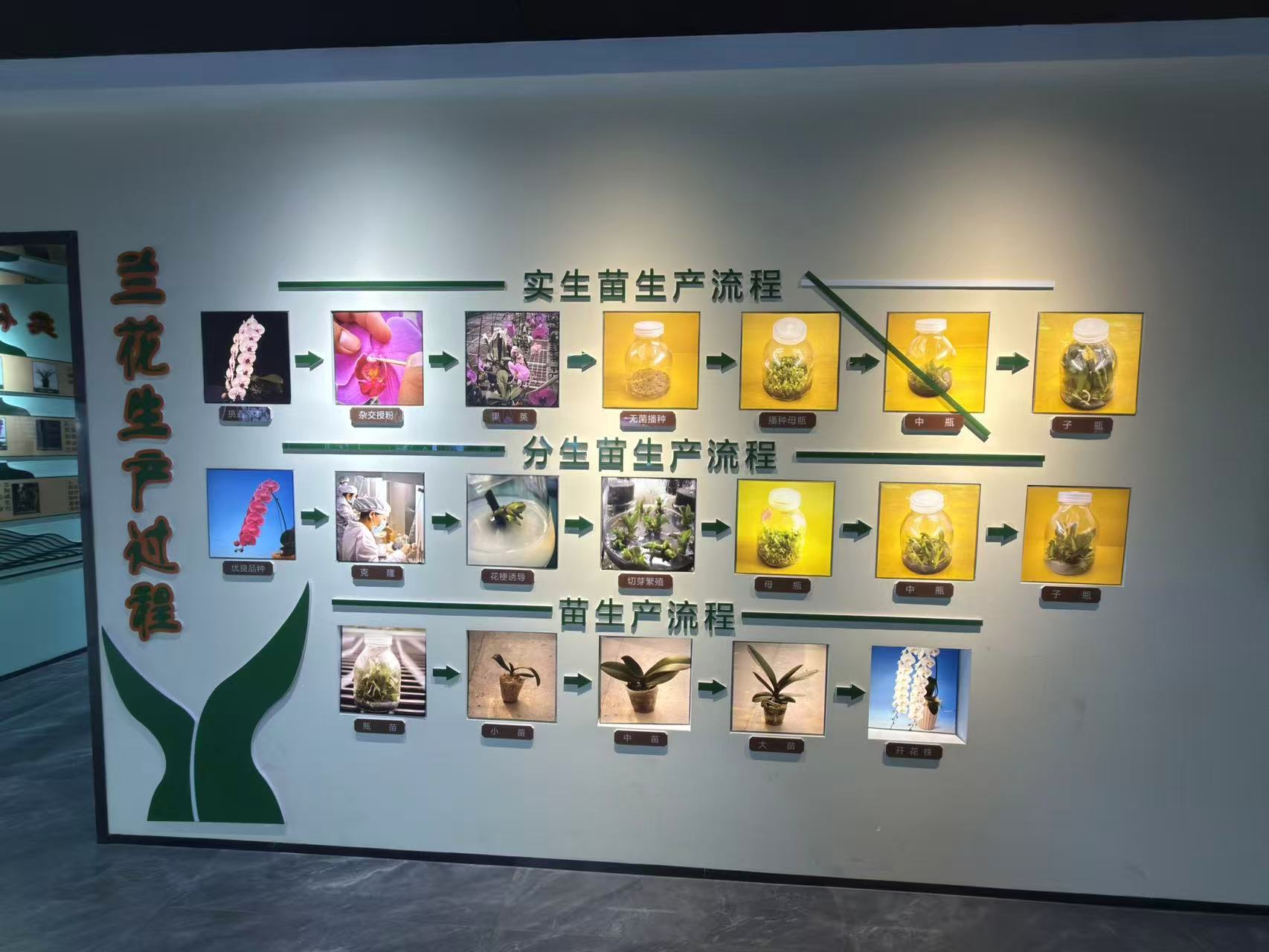
Science exhibition: how an orchid is made
Several display panels are worth reading slowly.
Orchid production process: seed-grown plants follow hybridisation and pollination to seed pod, sterile sowing, mother bottle, middle bottle, final bottle. Clone-grown plants follow selected variety to cloning, flower-stalk induction, shoot proliferation, mother bottle, middle bottle, final bottle. Nursery stages run from bottle seedlings through small, medium and large plants to flowering plants.
The takeaway: an orchid goes through this entire chain from seed to bloom, spending much of it inside sterile bottles.
Orchid meanings: Phalaenopsis means I love you, happiness is flying to you; red-centred Phalaenopsis means good fortune and lasting union; white Phalaenopsis means pure love and precious friendship; yellow Phalaenopsis means career success and thriving business; Dendrobium means welcome, my dear; Oncidium means hidden love and carefree joy; Cattleya means respect, admiration and feminine charm.
Outdoor grounds: trees covered in orchids
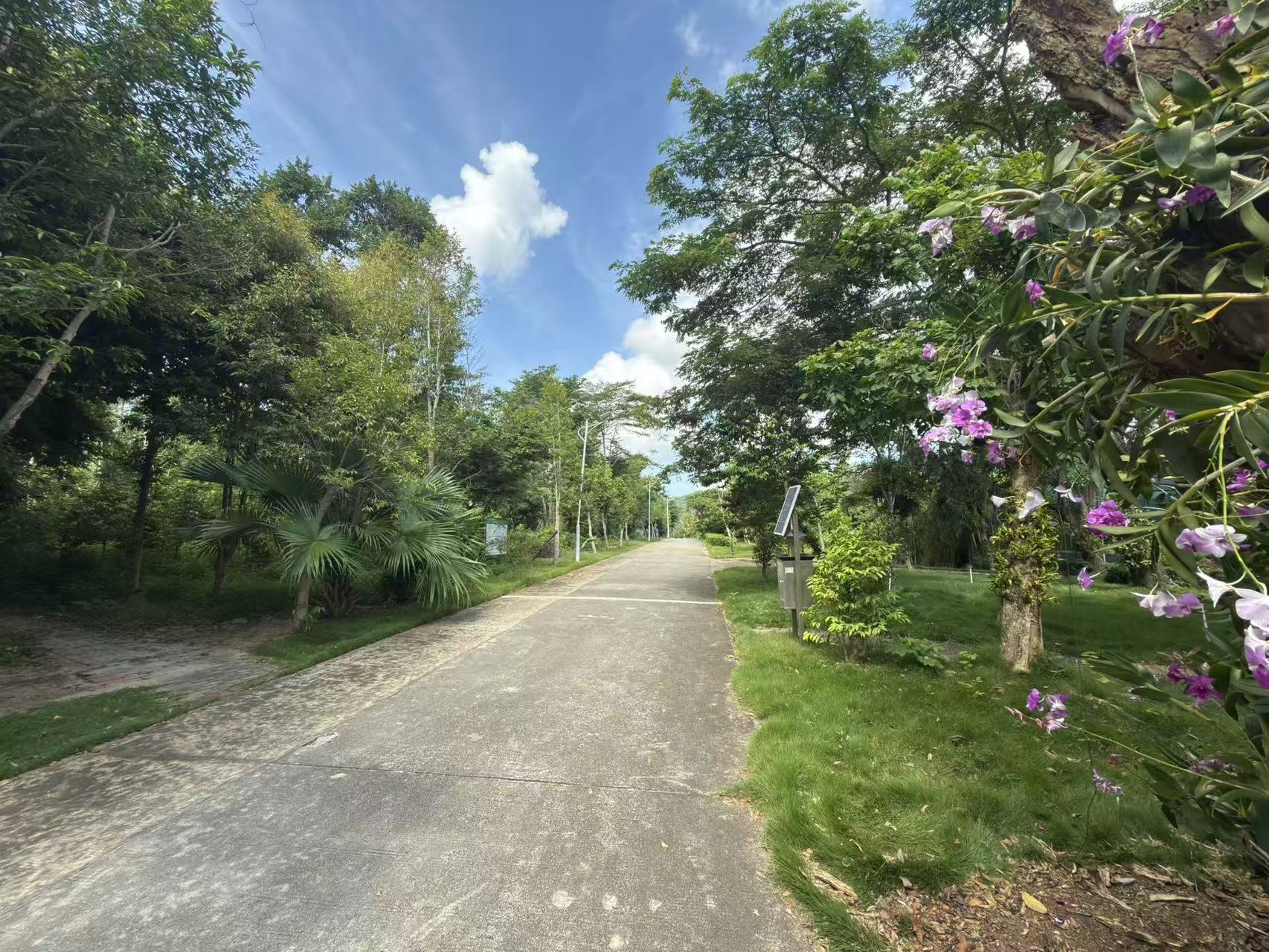
The outdoor area is large: lawns, paths, and a 200-mu tropical tree seed base with more than 50 species including rosewood, agarwood, hopea, mangrove trumpet, dragon's blood tree, teak and Calophyllum.
The best photo spot: roadside trees covered in epiphytic orchids — when they bloom the whole tree turns magenta.
Who it suits
Study-tour institutions and schools: orchid germplasm plus science panels make ready-made nature education material. Family science visits: flowers to see and QR codes to learn from. Photographers: epiphytic orchids, greenhouse light, flower seas. Orchid and plant lovers: many species, all labelled.
Note that access requires institutional arrangement; it is not a check-in style attraction.
Practical information
Name: National Tropical Orchid Germplasm Bank, Sanya Academy of Forestry. Address: Tianya District, Sanya, Hainan. Access: not open to individual visitors, open to organised groups and study-tour institutions through institutional arrangement. Suggested duration: 1.5-2 hours. Blooming season: varies by species, more orchids flower in winter and spring.
Tips
Photography: the greenhouse is shaded with soft light, excellent for flowers; epiphytic orchids grow on trunks so get close (phone macro works); the outdoor avenue with blue sky and clouds suits both portraits and landscapes.
Visiting: the greenhouse is hot and humid, wear light breathable clothing; outdoor shade is limited, bring sun protection; this is a research site, please do not touch the plants.
Because it is not open to individual visitors, anyone wanting to go needs to find an institution that can arrange it.
A closing thought
We came expecting simply to look at orchids, and the biggest gain was actually understanding how orchids are conserved.
Those orchids hanging on trees and clinging to rocks look wild, but behind them is a complete conservation system built by researchers — from sterile sowing to bottle seedlings and back to near-natural cultivation.
If you organise study tours, or simply love plants, this place is worth half a day. It is not on the standard tourist route, but what you see is more substantial than many ticketed attractions.
Photos taken by Zhinanbang Tourism in September 2026. If you are interested in off-the-beaten-track destinations like this, or want to exchange ideas about travelling in Hainan, we welcome a chat.