Many visitors to Haikou head for the coast or the volcano park, but Qilou Old Street is the one district you should not skip — it is the most historic quarter in the city, and it is free to visit.
Better still, tucked inside the old arcade buildings is the Haikou Intangible Cultural Heritage Exhibition Hall, which brings together Hainan opera, octet music, iron forging, sugar painting and Qiong-style mooncakes. Here is what we found on a recent visit.
Qilou Old Street: a century-old Nanyang quarter
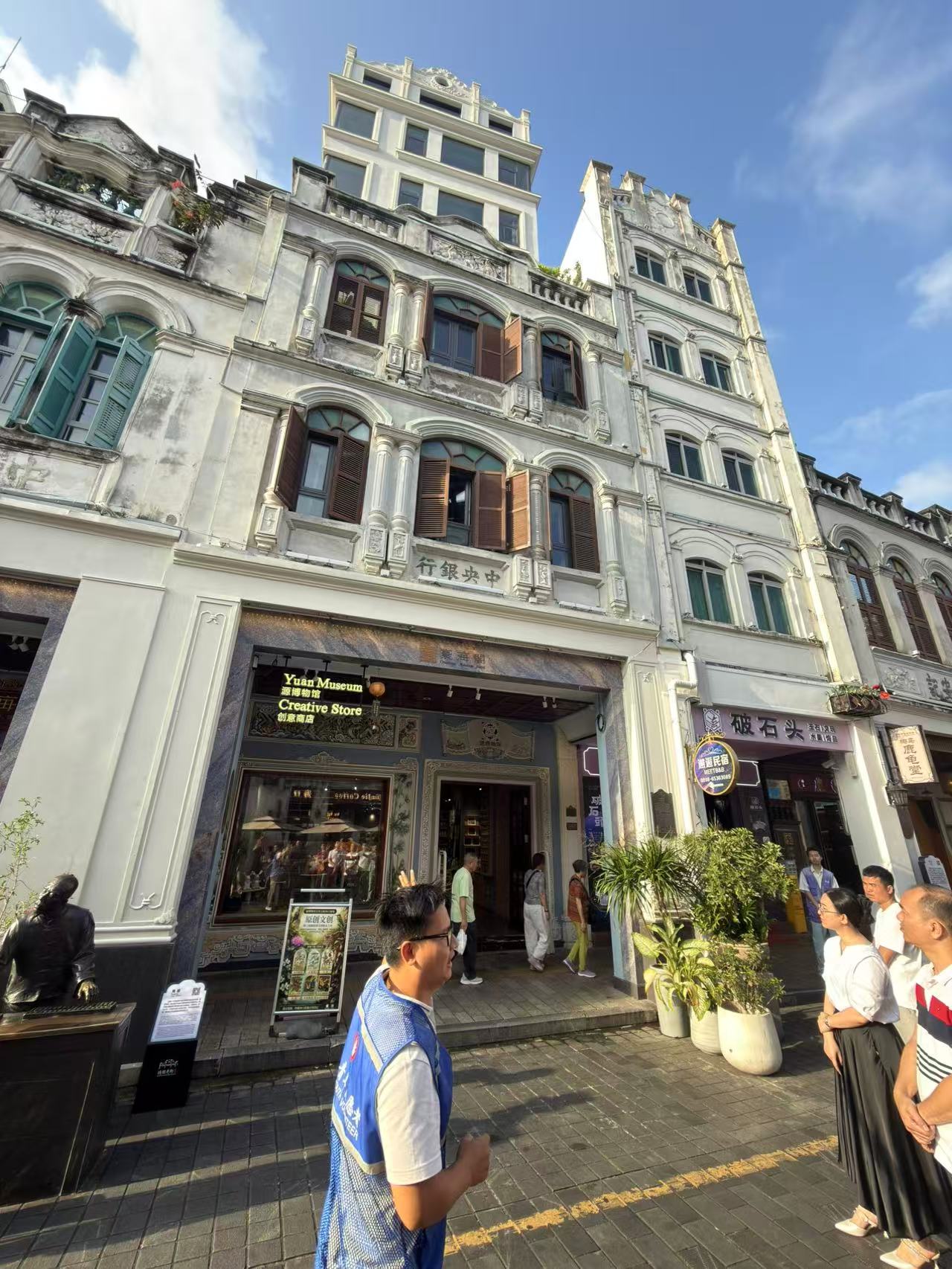
The old street area runs along Zhongshan Road, Deshengsa Road, Bo'ai Road and Xinhua Road, and is the best-preserved arcade (qilou) architectural group in Haikou. It is listed as a Historic and Cultural Street of China. According to what we learned during the visit, the protected area contains roughly 600 Nanyang-style buildings, of which 349 are listed as key protected structures.
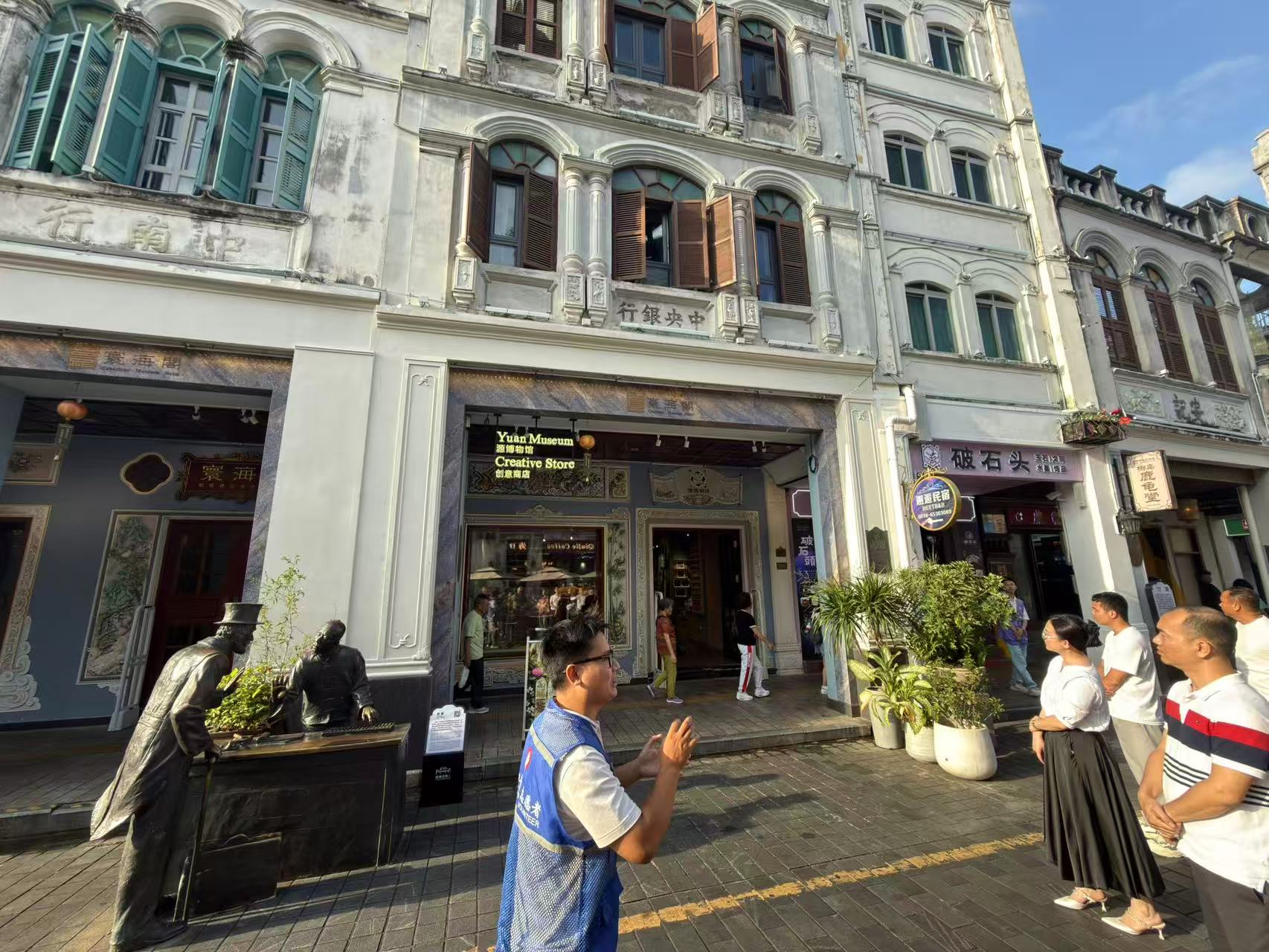
What a qilou is: the ground floor is set back to create a covered walkway, giving shade from the sun and shelter from rain. The form came from Southeast Asia and was brought back by overseas Chinese who had gone to Nanyang. Most Haikou arcades were built in the early twentieth century, blending Nanyang, European and local styles.
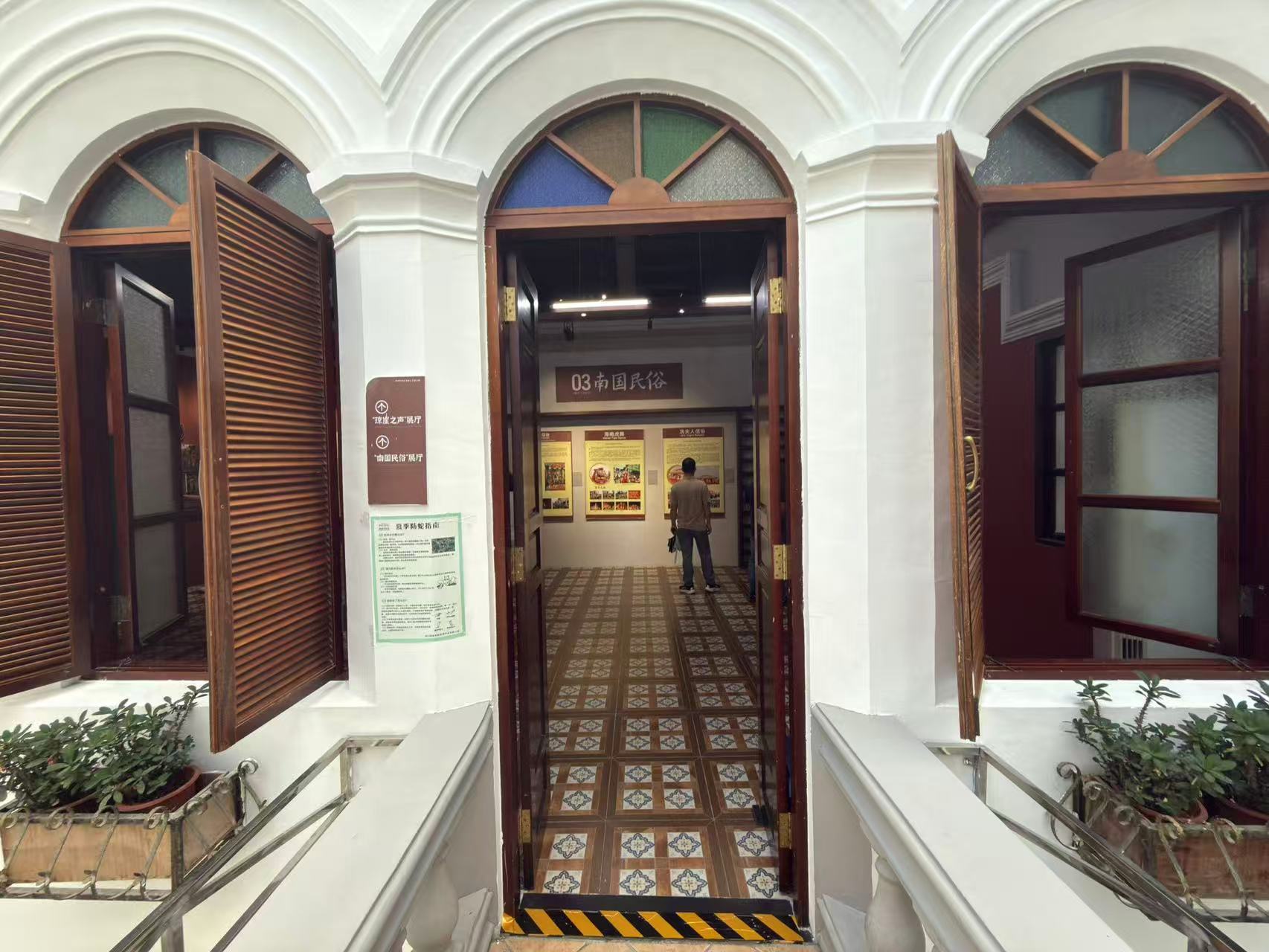
Details worth looking at: coloured glass arched windows with fanlights in blue, green and red; dark wooden louvred shutters, many original; patterned cement floor tiles inside the arcades; and baroque-style pediments, relief carving and old shop plaques such as the historic "Hang Nan Zhong" sign.
Zhongshan Road is the liveliest stretch, lined with restored white arcade buildings, bronze statues of street vendors and chess players, and old shops.
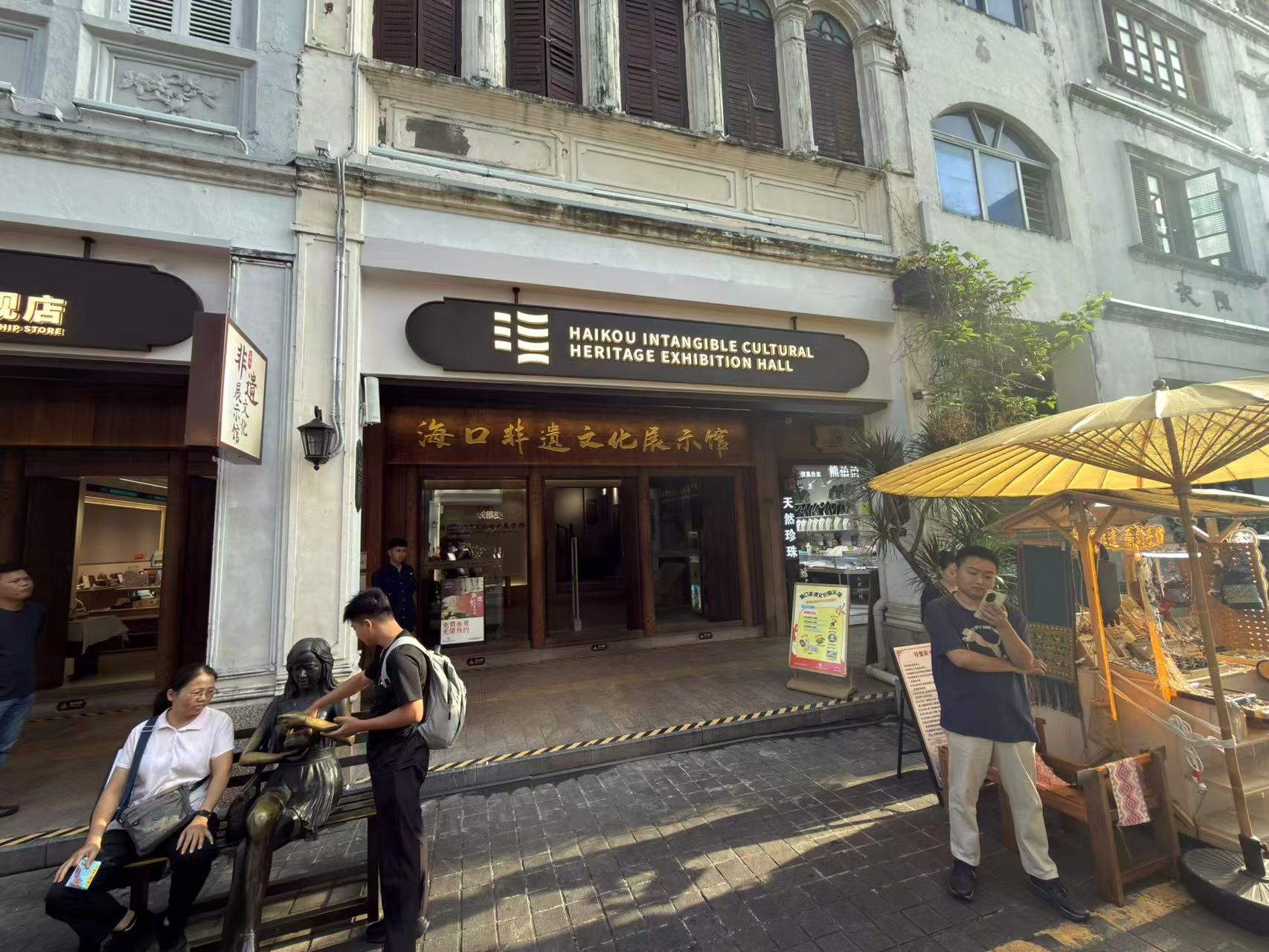
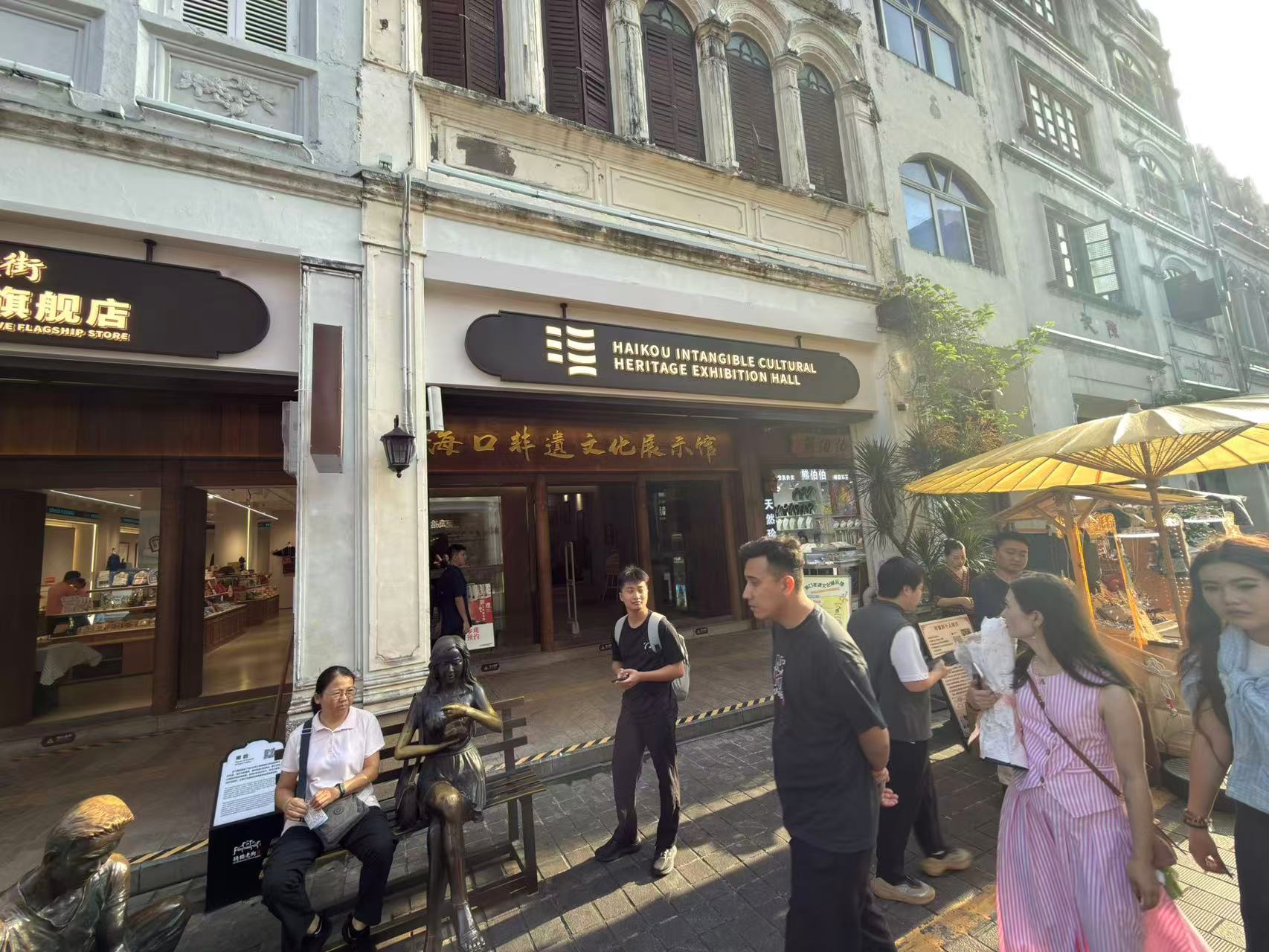
Haikou Intangible Cultural Heritage Exhibition Hall
It occupies arcade buildings on the old street and is free to enter. This was the highlight of our visit.
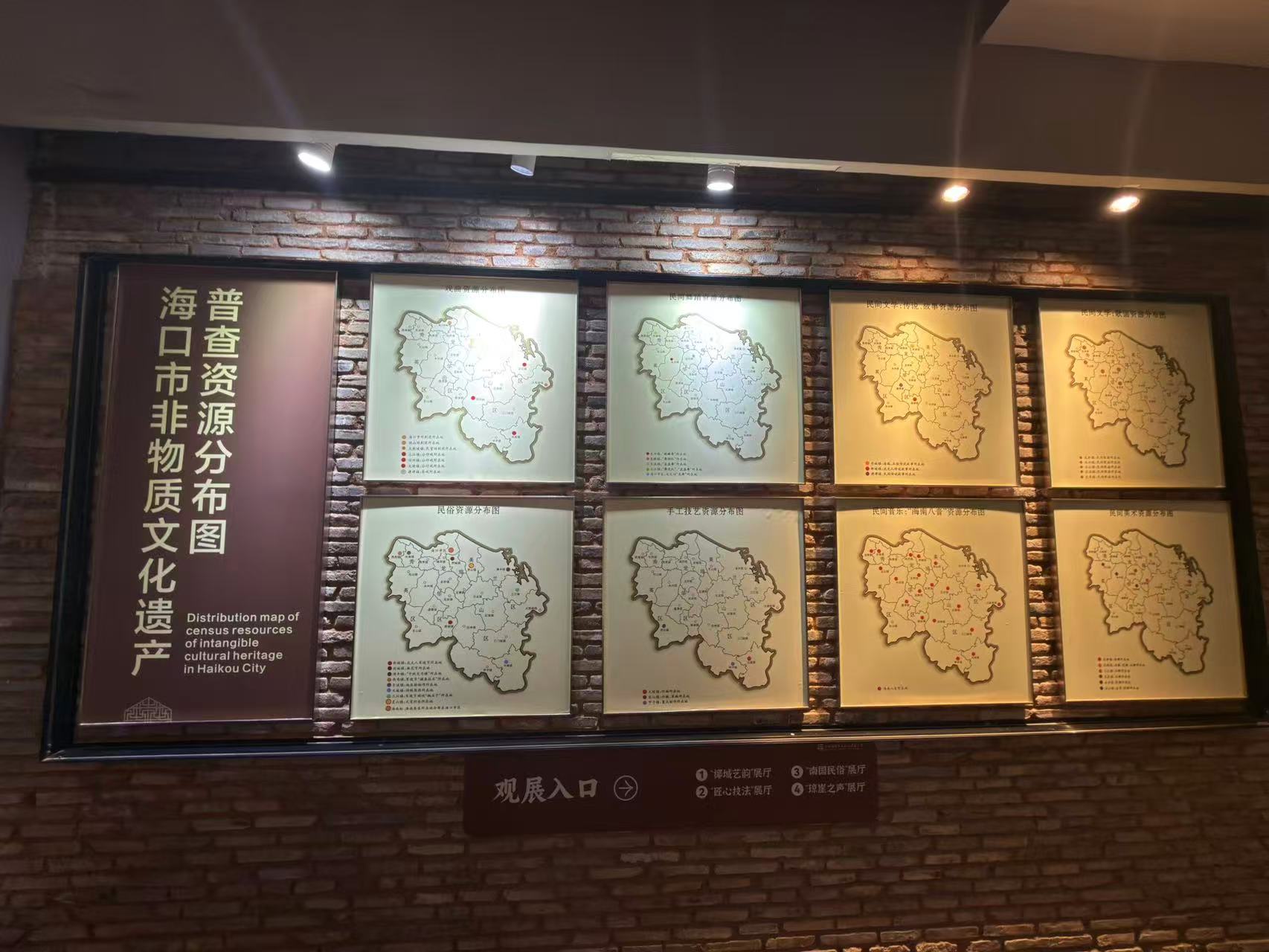
Inside are four halls:
01 Art of the Coconut City
Traditional performing arts of Haikou: Hainan zhai opera, the Haikou zhongpan dance and Shishan folk songs.
02 Craftsmanship
The traditional handicraft hall, with objects and displays:
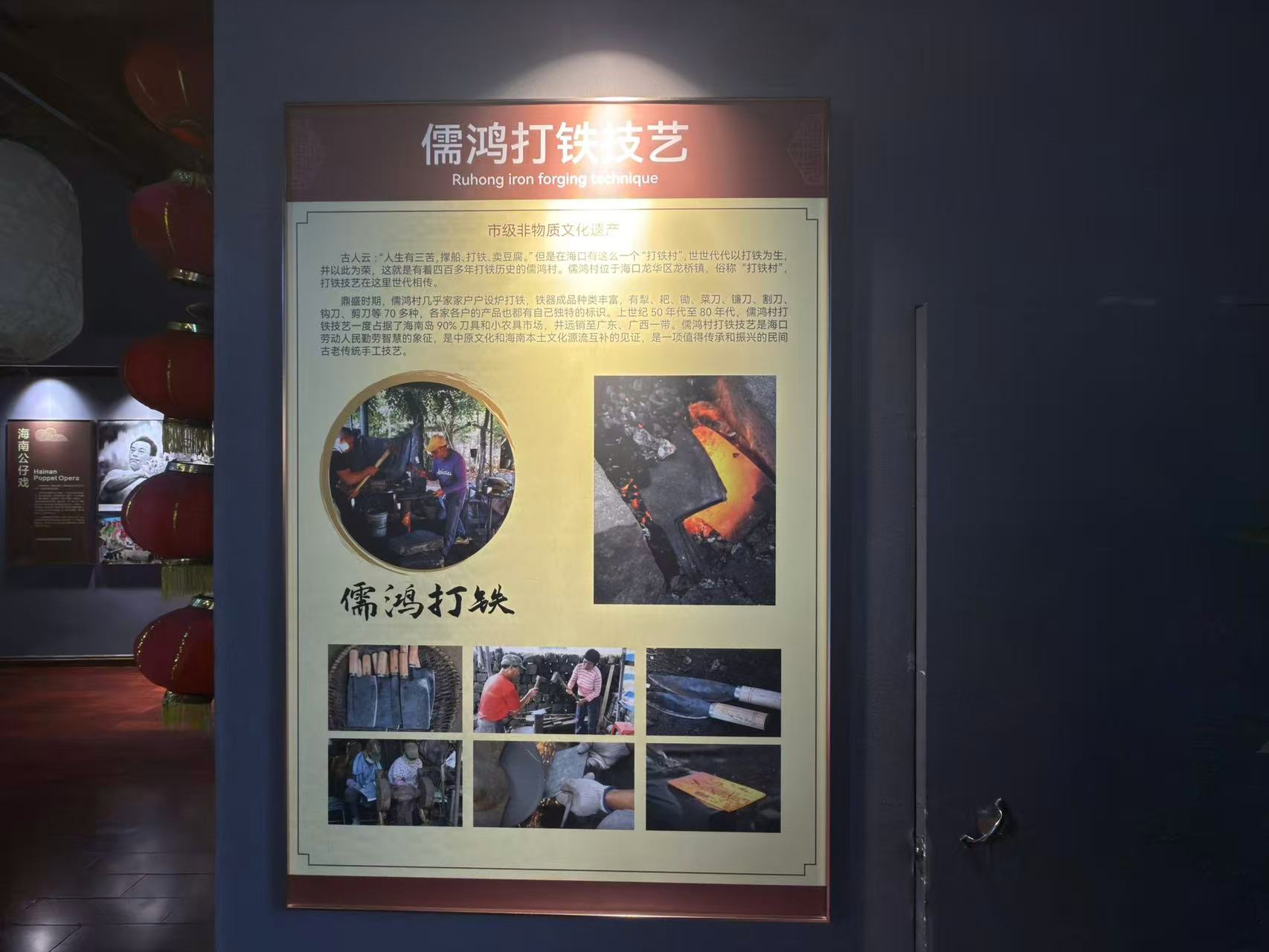
- Ruhong iron forging — from Ruhong village in Longqiao town, Longhua district, known as the "forging village", with more than 400 years of history. At its peak almost every household had a forge, producing ploughs, harrows, hoes, cleavers, sickles, hook knives and scissors — more than 70 kinds of ironware. In the 1950s-80s it supplied some 90 per cent of Hainan's knife and small farm tool market
- Sugar painting — images drawn with molten sugar on a stone slab, both food and folk art
- Traditional sugar making — Hainan's native method using locally grown sugarcane, pressed, boiled and filtered into red and white sugar, with more than 600 years of history
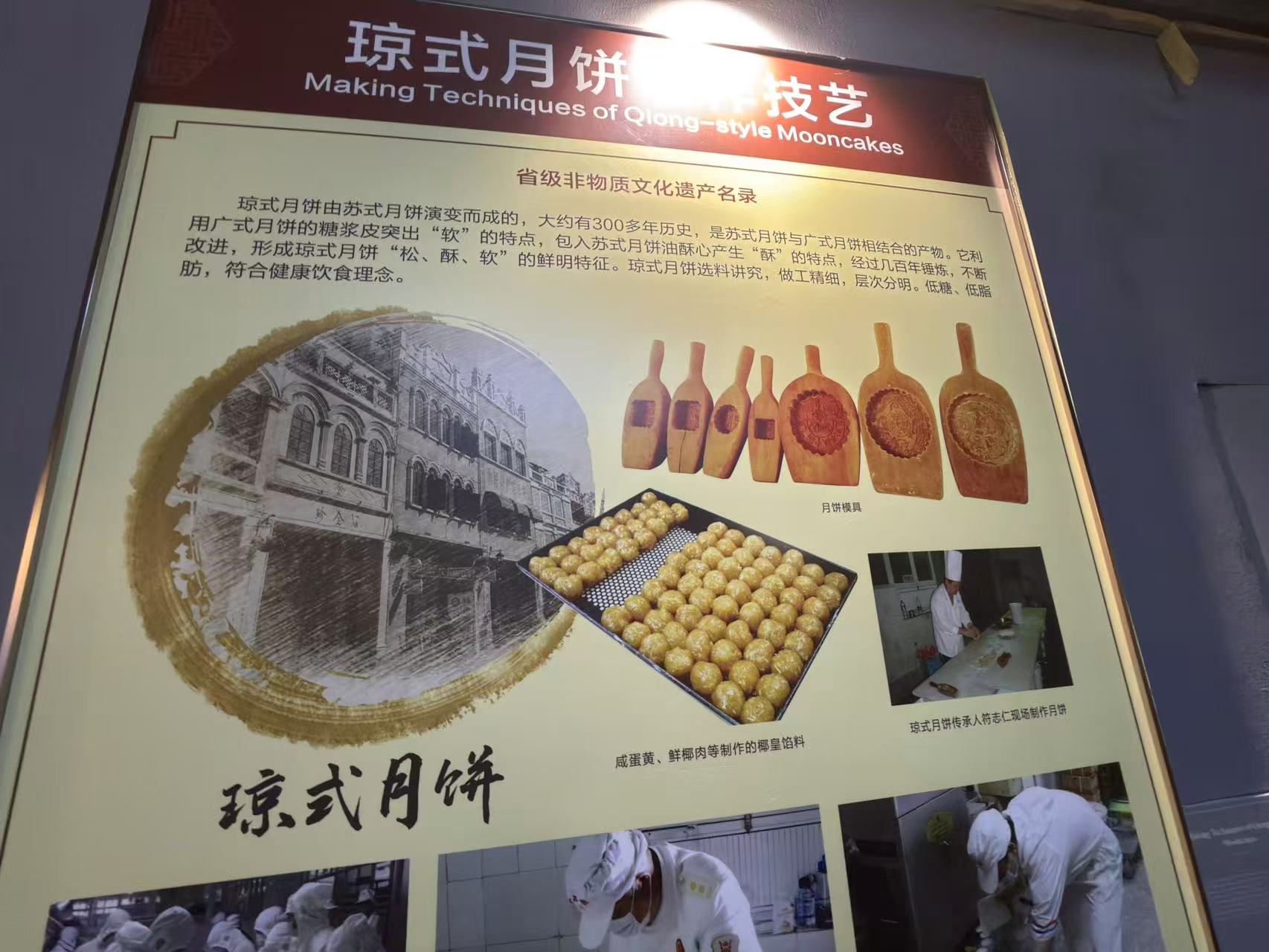
- Qiong-style mooncake making — provincial-level heritage, roughly 300 years old, blending Suzhou- and Cantonese-style mooncakes: a syrup crust for softness and an oil-pastry heart for flakiness, giving the "light, flaky, soft" character
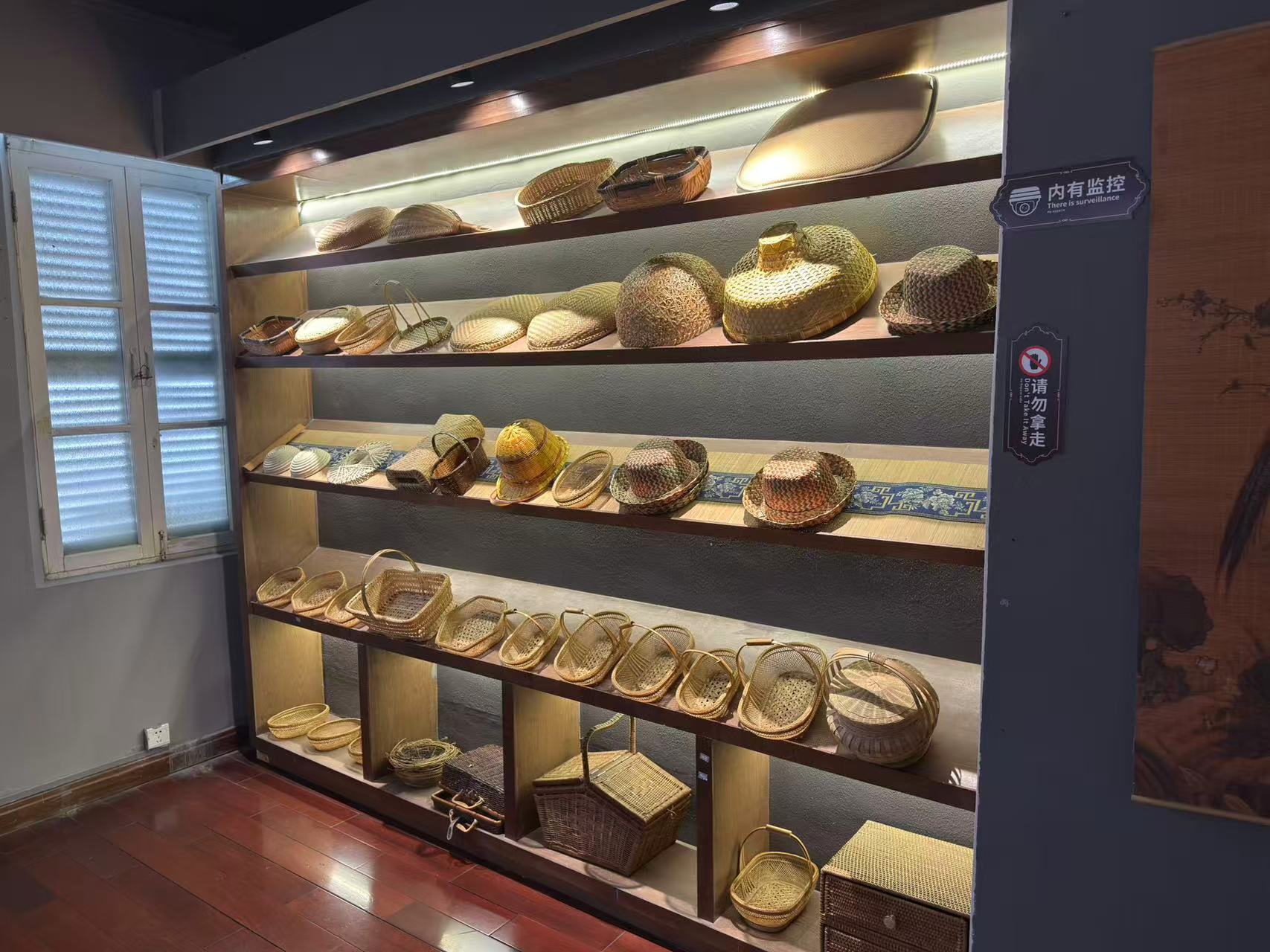
- Bamboo weaving — shelves of hand-woven baskets, creels, hats and boxes
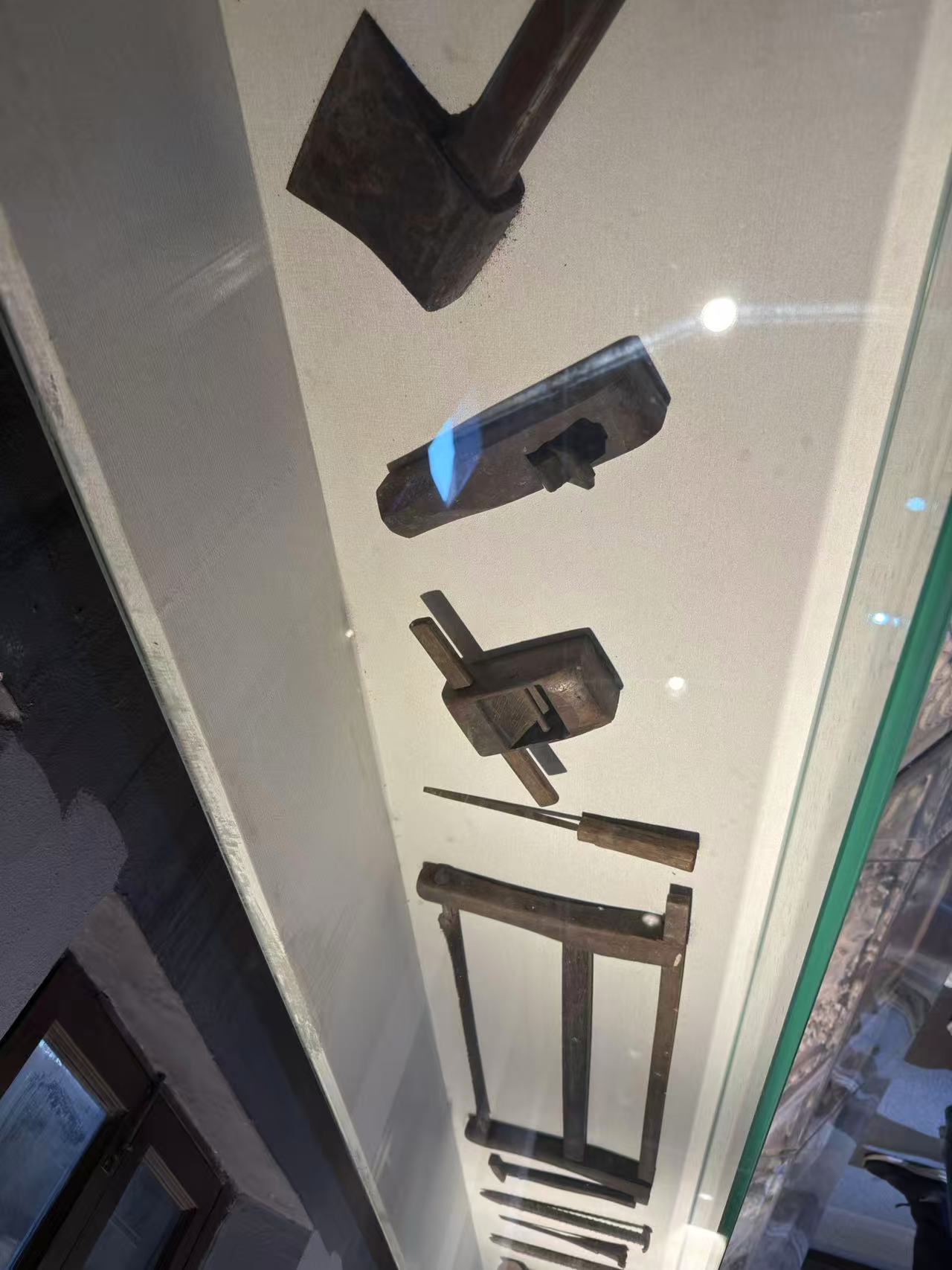
- Traditional woodworking tools — planes, saws and chisels
03 Folk Customs of the South
Everyday folk life of Hainan, presented with patterned floor tiles and period photographs.
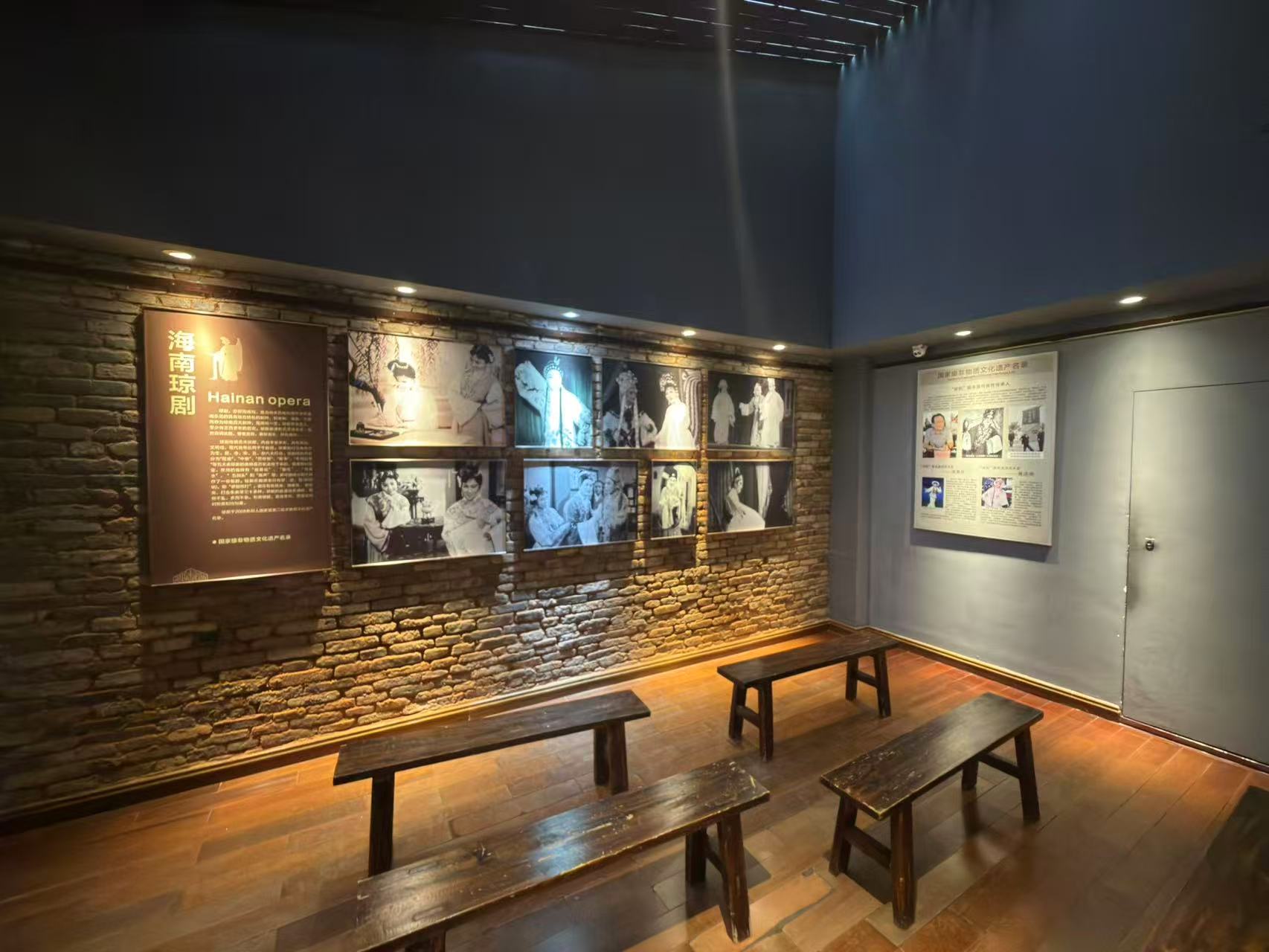
04 Voices of Qiongya
The sound-based heritage hall:
- Hainan Qiong opera — national-level intangible cultural heritage, the principal local opera of Hainan
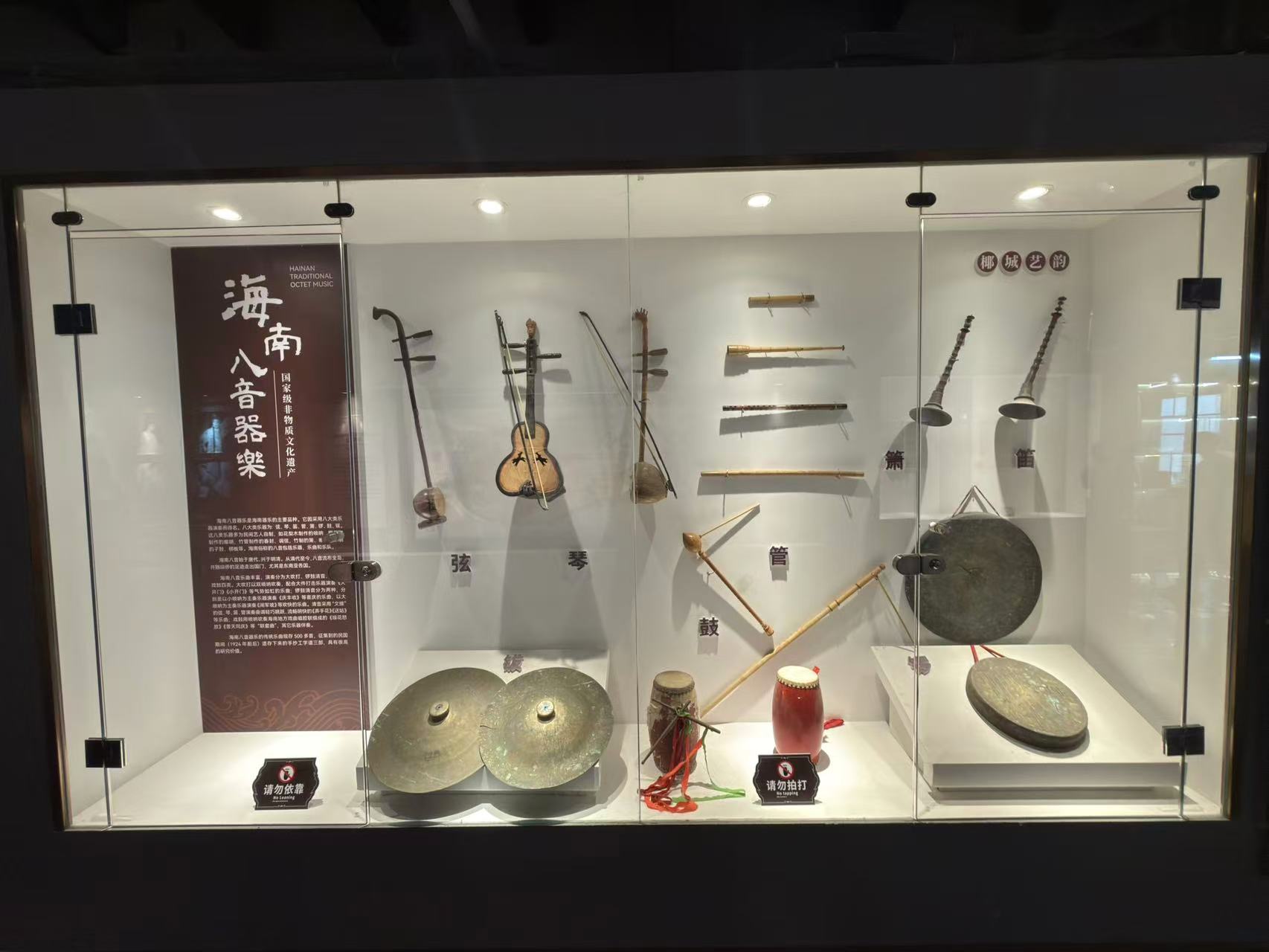
- Hainan octet music — national-level heritage (inscribed in 2008), named for its eight categories of instruments including bowed strings, plucked strings, winds, drums, gongs and cymbals. It is the main instrumental tradition of Hainan and is heard at local weddings and communal festivals. The cases display erhu, coconut-shell fiddle, flute, xiao, suona, drums, gongs and cymbals
Extras worth your time
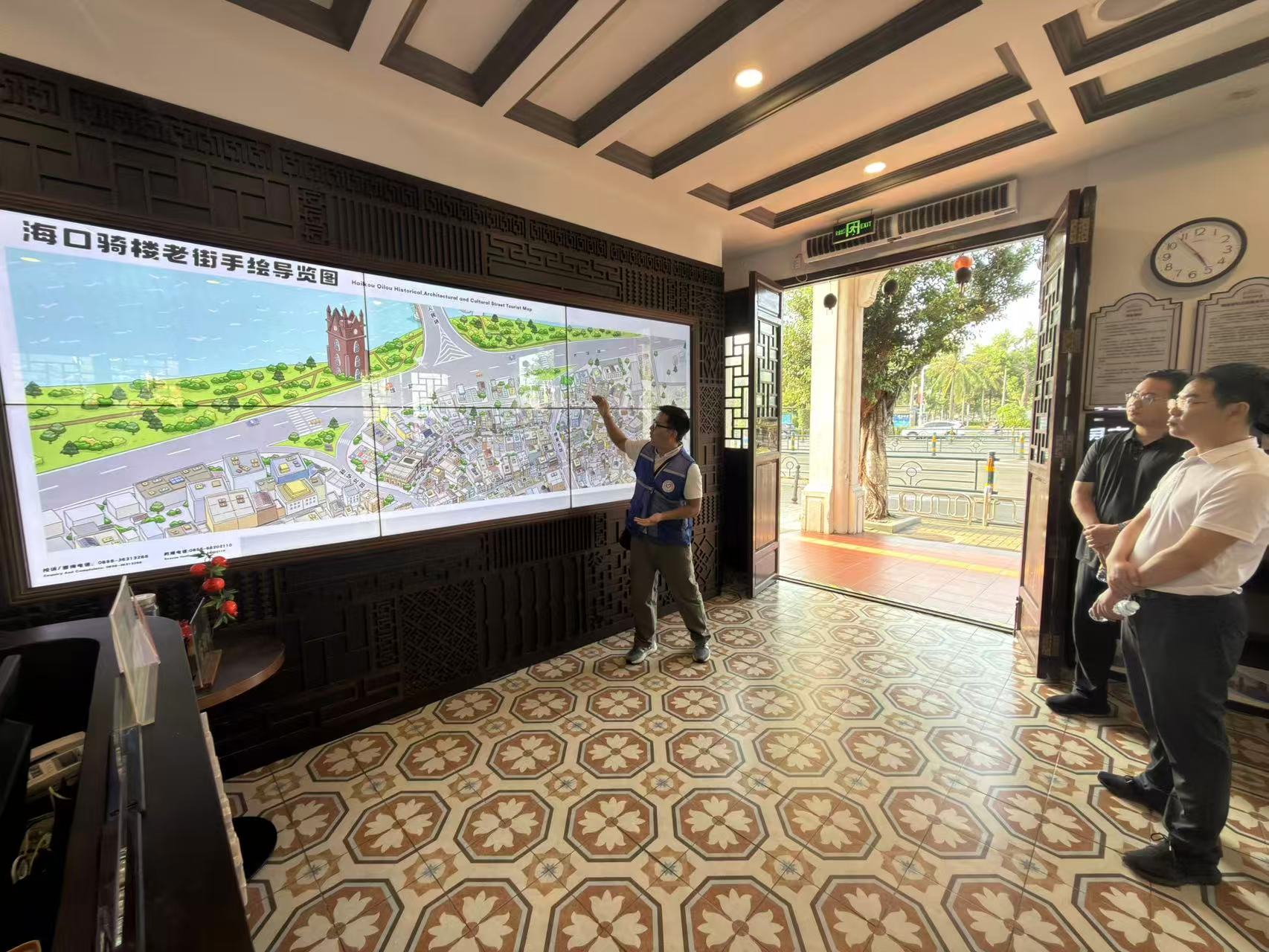
- The painted guide map of Haikou Qilou Old Street — a wall-sized digital hand-drawn map showing every lane, with a guide explaining it
- Bilingual volunteer guides — the quarter has set up a bilingual volunteer team offering guided walks for international visitors, part of its effort to serve overseas guests
- Digital sand table — a three-dimensional model of the old street with large-screen projection
- Survey and resource distribution maps — eight maps plotting Haikou's intangible heritage resources by district
- Heritage primer — a wall listing the ten classifications of intangible cultural heritage, from folk literature and traditional music to traditional medicine and custom
Suggested route (about 2-3 hours)
Walk Zhongshan Road → take in the arcade streetscape, architecture and old shops → the Intangible Cultural Heritage Hall (the main stop, 1-1.5 hours) → the painted guide map and digital sand table → finish with a local tea house or snack shop on the old street.
Practical information
| Item | Detail |
|---|---|
| Name | Haikou Qilou Old Street · Haikou Intangible Cultural Heritage Exhibition Hall |
| Address | Zhongshan Road area, Haikou, Hainan (inside the Qilou old street) |
| Admission | Free |
| Time needed | 2-3 hours including the street |
| Getting there | Accessible by city bus; taxi or drive to the Zhongshan Road area |
Tips
Photography: afternoon light suits the white arcade facades and coloured glass; inside the halls it is dim, so get close to display panels or raise the ISO.
Visiting: the old street is pedestrian, so wear comfortable shoes; afternoons and early evenings are busiest, so come in the morning for emptier shots; if you meet a guide inside the hall, listen for a while — it adds a lot.
Elsewhere: plenty of Hainan snacks and old-style tea houses surround the street, a good way to finish.
A closing thought
We expected a quick look at old buildings and ended up spending over an hour in the heritage hall.
What moved us most were the objects: forging tools, woven bamboo baskets, woodworking planes, old photographs of Qiong opera and octet instruments. They are not "relics" sealed in cases — they were everyday things for Hainanese people just decades ago.
And it is all free. If you come to Haikou, set aside half a day for Qilou Old Street — and step inside the hall, not just for the photos.
Photos by Zhinanbang Tourism. If you are interested in culturally rich destinations in Hainan, or want to exchange travel ideas, we welcome a chat.